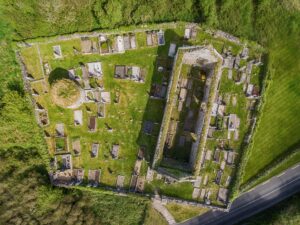
It is anything but. The grass-covered cairn, a subrectangular pile of stones used in prehistoric times to mark burials or significant places in the landscape, measures roughly 6.5 metres by 6.1 metres at its base and rises only between 0.3 and 0.6 metres above the surrounding ground. Its top is unusually flat, giving it a compressed, almost deliberate appearance rather than the rounder profile such monuments often carry.
The cairn bears clear signs of interference. Along its western edge the stones have been disturbed, and a hollow roughly a quarter of a metre deep sits at its centre, both suggesting that someone, at some point, dug into it. Whether this was curiosity, treasure-seeking, or agricultural convenience is unknown. What is less ambiguous is that this monument is not alone. Two further cairns sit to the north-east, one approximately 33 metres away, the other around 77 metres distant, forming a loose cluster across this otherwise unremarkable stretch of Clare farmland. The grouping hints at a place that once carried some kind of sustained significance, though what that significance was, and to whom, has long since passed out of any recoverable record.