The only evidence that something once occupied this north-east facing slope near Knockmitten is a single aerial photograph, taken in 1971, which captured what archaeologists call a cropmark, a faint shadow in the vegetation caused by buried features affecting how plants grow above them. That photograph, catalogued as FSI 227/8, shows the outline of a roughly circular enclosure approximately 38 metres in diameter, and it remains the sole direct record of the site.
Ringforts, which are enclosed farmsteads typically surrounded by one or more earthen banks and ditches, were the most common form of rural settlement in early medieval Ireland, built and occupied broadly between the sixth and twelfth centuries. Thousands survive across the country, though many more have been lost to agriculture, development, and time. The Knockmitten enclosure is thought to have been levelled before modern building began on the site, and sits close to the Camock River on a slope that would have offered reasonable agricultural ground. Whether the enclosure was a simple farmstead, a more elaborate defended site, or something else entirely, is not known; the cropmark evidence alone does not tell us. The site was recorded by archaeologist Geraldine Stout and uploaded to the national record in August 2011.
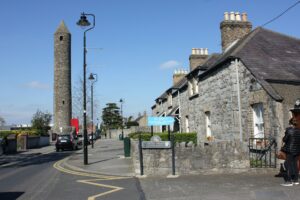
There is nothing to see at ground level. The housing estate now covers the area, and no surface trace of the enclosure survives. For anyone interested in the archaeology of erased landscapes, the interest lies precisely in that invisibility, in knowing that a 1971 aircraft and the particular dryness of a summer growing season briefly made something ancient legible again, before it disappeared back into the ordinary fabric of suburban Dublin.