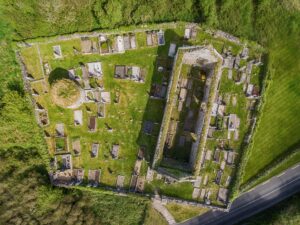
The one recorded at Leana in County Clare is a typical example of this quietly peculiar class of site. A fulacht fia, in its simplest description, is a burnt mound, the accumulated debris of a cooking or heating method that involved dropping fire-heated stones into a water-filled trough until the water boiled. The stones crack and shatter with the repeated thermal shock, and over time the broken, heat-reddened fragments pile up into a low, often horseshoe-shaped mound around the trough. These mounds are generally dated to the Bronze Age, roughly 1500 to 500 BC, though some examples fall outside that range.
The precise details of the Leana site, including its dimensions, condition, and exact circumstances of discovery, are not currently available in the public record, which places it among a large number of Clare monuments awaiting fuller documentation. What is certain is that County Clare has no shortage of prehistoric activity, and fulachtaí fia are frequently found near streams, marshy ground, or other reliable water sources, since a ready water supply was essential to how they functioned. That waterlogged setting also helps explain why so many have survived at all; the damp conditions that would discourage other land uses have often kept these low mounds undisturbed for millennia.