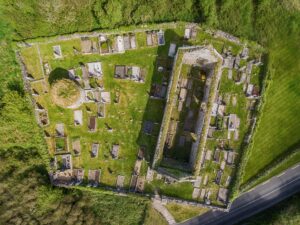
Raths, sometimes called ringforts, are among the most numerous archaeological monument types in Ireland, with tens of thousands recorded across the country, yet each one represents what was once a working homestead, a place where a farming family lived, kept livestock, and organised their daily life behind a raised circular bank and ditch. That so many survive at all is partly a matter of folklore: a widespread belief that disturbing a fairy fort, as they came to be called, brought misfortune, a superstition that proved more effective than any preservation order.
The Kells example belongs to this broad category of enclosed settlements that were in common use roughly between the sixth and twelfth centuries, though some sites have origins or occupation layers that stretch earlier or later. The word rath specifically refers to an enclosure defined by earthen rather than stone construction, as distinct from the cashels and cahersin found more commonly across the limestone pavements of the Burren further north in Clare. Without more detailed excavation records or documentary sources attached to this particular site, its individual history remains unread, its occupants nameless, its precise date of construction unknown.