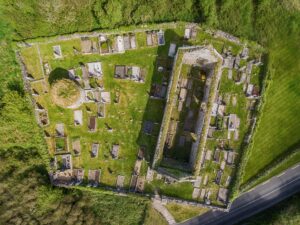
A souterrain, to use the proper term, is an artificial tunnel or chamber constructed, typically in the early medieval period, from dry-laid stone. They appear across Ireland in considerable numbers, and their precise purposes remain a subject of reasonable debate among archaeologists: cold storage, refuge during raids, or simple concealment of valuables are all plausible, and several functions may have overlapped at any one site.
Inchiquin as a place-name carries considerable weight in Clare. The area is associated with the Uí Briain dynastic territory and later with the earls of Thomond, giving the landscape a long history of occupation and political significance. Souterrains tend to cluster around early ecclesiastical sites and ringforts, the circular earthen enclosures that served as farmsteads throughout the early medieval centuries, so it is reasonable to suppose that this passage once sat beneath or beside just such a settlement. The construction method, corbelled stone or lintelled roofing over a narrow passage, required skill and effort, suggesting it served a genuine practical need for whoever built it.