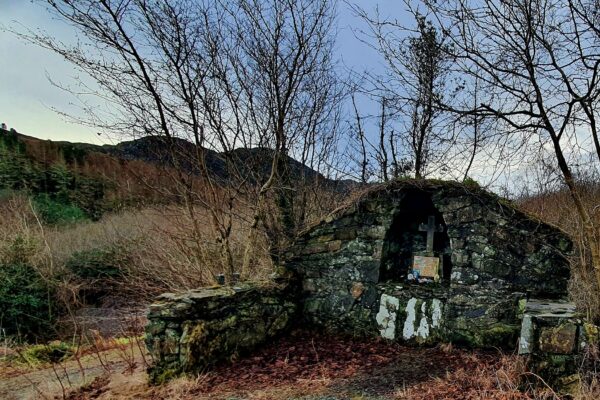
Recorded in 1936 by the folklorist Ó Muirgheasa, this former 'rag well' sits quietly near the ruins of St. Barron's Monastery and its old chapel, just a short distance from Ballyshannon. The well, which would have once drawn pilgrims seeking healing or blessings, now stands disused; its waters long since dried up.
Rag wells were common features of Irish religious practice, where visitors would tie strips of cloth to nearby trees whilst making prayers or wishes. These ritual sites often became focal points for local communities, blending pre-Christian traditions with Catholic devotion. St. Barron's Well would have served this dual purpose, offering both spiritual solace and a tangible connection to the monastery that once thrived nearby.
The site's documentation comes from the comprehensive Archaeological Survey of County Donegal, compiled by Brian Lacey and his team in 1983, which catalogued field antiquities from the Mesolithic period through to the 17th century. Though the well no longer flows and the monastery lies in ruins, these remnants offer a window into the religious landscape of medieval Donegal, where holy wells, monasteries, and local saints formed an intricate network of sacred spaces that shaped daily life for centuries.