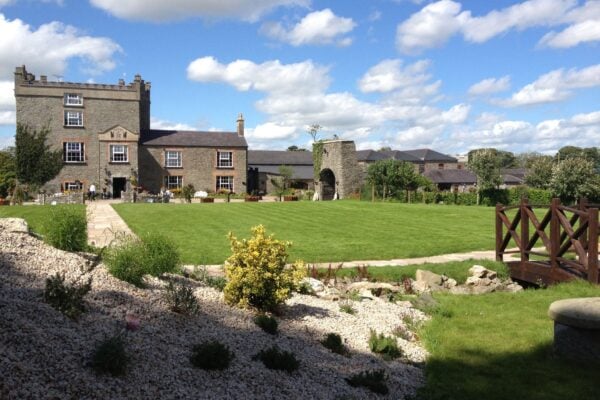
Castle, Clonmore, Co. Louth
Co. Louth |
Tower Houses
The ruins of Clonmore Castle in County Louth offer a fascinating glimpse into medieval Irish architecture, though only a fragment of its former glory remains.
What stands today is the northwest angle tower, a three-storey limestone and greywacke structure that once formed part of a much larger tower house. An illustration by Wright from 1758 shows the castle complete with its rectangular corner tower, but time has reduced it to this solitary remnant, which still bears telling marks of its original construction.
The surviving tower reveals intriguing architectural details about the castle's design. It originally projected about 2.5 metres west from the main building's wall, and you can still see where the west wall of the main tower house was broken away along the tower's eastern end. Inside, the remains of a stairwell that once provided access to the upper floors are still visible. The tower's defensive nature is evident in its narrow slit windows; three pierce the western wall whilst two more guard the northern face, each with embrasures that would have allowed defenders to shoot whilst remaining protected.
Perhaps most intriguing is the evidence of vaulting in the tower's broken southern face. Rather than being part of the main ground floor chamber, this appears to be the remains of an entranceway that once stood at the southern end of the western wall. Built from roughly coursed local stone, the tower stands as a testament to medieval building techniques and the strategic importance of fortified residences in medieval Louth. Historical records, including Murphy's 1895 observations and notes from the County Louth Archaeological and Historical Journal in 1921, have helped piece together the castle's story, though much of its history remains as fragmentary as its walls.
Visitor Notes
Added by