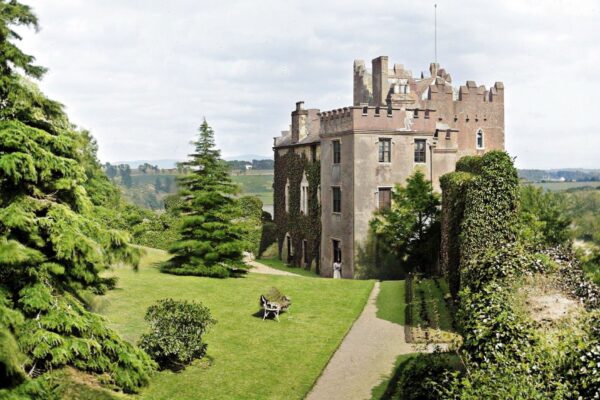
Site of Castle, Newcastle, Co. Tipperary South
Co. Tipperary |
Masonry Castles
On a gentle rise in the valley floor, about 220 metres south of a tributary of the River Duagh, lies the site of what was once Newcastle Castle in County Tipperary.
Today, nothing remains visible above ground of this medieval stronghold, which now sits quietly in an old orchard next to a farmyard. The castle appears on historical Ordnance Survey maps from 1840 and 1907, though even then it was marked only as a 'site of castle', suggesting its ruins had already largely disappeared by the 19th century.
The Civil Survey of 1654-6 provides a glimpse into the castle's declining state during the mid-17th century, describing it as an 'ould ruinous Castle, whereof one side is onely standinge'. This evocative description captures a structure already in advanced decay, with just a single wall remaining upright to hint at its former presence. By the time local historian Graves was writing in the 1870s, he identified Newcastle as the principal castle of the De Prendergast family, Norman settlers who arrived in Ireland during the 12th century Anglo-Norman invasion.
The De Prendergasts were significant landholders in medieval Tipperary, and Newcastle would have served as both a defensive fortification and a symbol of their authority over the surrounding lands. Like many Irish castles, it likely fell into disrepair following the upheavals of the 17th century; the Cromwellian conquest, subsequent land confiscations, and changing military technology all contributed to the abandonment of these once-formidable strongholds. Though the stones have long since vanished, probably recycled into local farm buildings, the site remains a testament to the layers of history embedded in the Irish landscape.
Visitor Notes
Added by