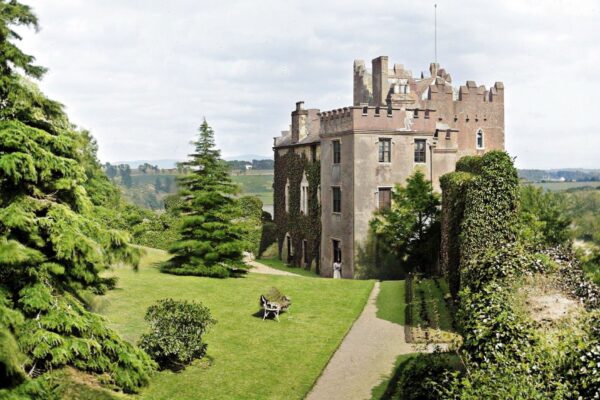
Where once stood what the Ordnance Survey Letters of 1930 described as "the ruins of an old house or castle," modern agricultural life has thoroughly claimed the space. Today, contemporary barns and sheds stand behind older farm buildings, occupying the exact spot where this mysterious structure once dominated the landscape.
The original building's story remains frustratingly elusive, with even its basic identity uncertain; was it a fortified castle or simply a substantial house? The name "Black Castle" suggests something more formidable, though such names often attached themselves to any dark stone ruin that captured local imagination. The site's complete levelling means archaeologists and historians must rely entirely on documentary evidence and place name studies to piece together its past.
What we do know comes largely from the meticulous work of scholars like O'Flanagan, whose 1930 survey captured the site whilst some physical traces still remained. The Archaeological Inventory of County Tipperary, compiled by Jean Farrelly and Caimin O'Brien in 2002, provides our most comprehensive modern assessment, though by then the transformation to agricultural use was complete. Black Castle joins countless other Irish sites where medieval or early modern structures have vanished beneath the practical needs of farming communities, leaving only their names to mark where history once stood.