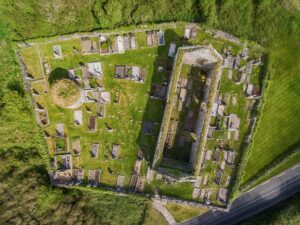
A cairn, in the broadest sense, is a deliberate mound of stones raised by human hands, and in an Irish prehistoric context such structures most often served as burial markers or territorial signals, though their exact purpose varied considerably across the millennia in which they were built. This one, in Leana, is recorded as a monument but remains largely uncharacterised in the public domain, which gives it a particular quality: it exists on the map, in the soil, and in the official record, yet its details have not yet made their way into the wider conversation about Clare's prehistoric landscape.
Clare is not short of prehistoric remains. The Burren to the north is famous for its portal tombs and limestone pavements, and cairns appear throughout the county in varying states of survival, some reduced to a scatter of stones across a field, others still carrying enough height to suggest their original intention. Without specific excavation data or documentary history attached to the Leana example, it sits in the company of many such monuments across Ireland whose existence is confirmed but whose story has not yet been formally told. The townland name itself, Leana, derives from the Irish word for a wet meadow or riverside plain, suggesting a low-lying situation that might once have made it a significant local landmark in an otherwise flat terrain.