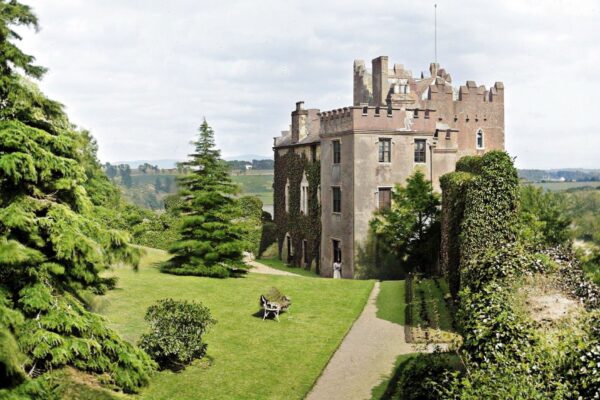
This small square castle, measuring roughly 13 metres east to west and 9 metres north to south, sits in a slightly elevated position that once offered commanding views across the surrounding countryside. Its proximity to an ancient ringfort immediately to the north suggests this spot held strategic importance long before the castle's construction, with successive generations recognising the defensive advantages of the location.
The castle's ruins, though modest in scale, tell a story of substantial construction; the walls, approximately 2 metres thick, were built to withstand both the elements and potential attackers. When surveyed in the 1930s during the Ordnance Survey Letters project, these walls still stood about 2.5 metres high, though time had already stripped away any distinguishing architectural features that might have helped date the structure more precisely. The fortress's compact footprint was typical of smaller Irish tower houses and castles built during the later medieval period, designed more for local defence than grand territorial ambitions.
Today, the castle has all but vanished from view at ground level, swallowed by centuries of agricultural activity and the relentless march of farming progress. Where stone walls once rose above the Tipperary landscape, sugar beet and other crops now grow, leaving only the faintest traces of this once formidable structure. Archaeological records from 2002, updated in 2008, serve as the primary evidence of its existence, preserving the memory of Ballydavid Castle for future generations who might otherwise never know that beneath their feet lies a piece of Ireland's castellated past.