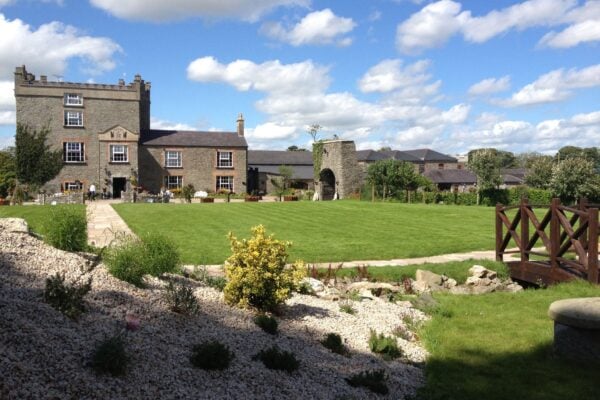
Castle - tower house, Dundalk, Co. Louth
Co. Louth |
Tower Houses
In the heart of Dundalk, County Louth, once stood a fortified tower house known as Rothe's Castle, sometimes called Rood's Castle.
This medieval stronghold appears on Henry Duke's 1594 perspective map of the town, marking its importance in the urban landscape of Tudor Ireland. Like many tower houses of its era, it would have been a formidable stone structure, combining defensive capabilities with residential quarters for a prominent local family.
The castle managed to survive the tumultuous centuries that followed its construction, weathering the various conflicts and changes that swept through Ireland. However, its fate was sealed not by siege or warfare, but by the changing tastes of the Georgian era. In 1747, Lord Limerick embarked on an ambitious urban renewal project, demolishing the old town castles that had defined Dundalk's skyline for centuries. In their place, he erected what he considered 'good substantial houses', more suited to the refined sensibilities of the 18th century.
Today, no trace remains of Rothe's Castle above ground, though its approximate location has been identified through historical research and archaeological surveys conducted in the 1980s and 1990s. The site serves as a reminder of Dundalk's medieval past, when fortified tower houses dominated Irish towns, serving as both symbols of power and practical refuges in uncertain times. The castle's story reflects a broader pattern across Ireland, where medieval fortifications gave way to Georgian architecture as the country moved from an era of constant conflict to one of relative stability and prosperity.
Tags
- Dundalk
Visitor Notes
Added by