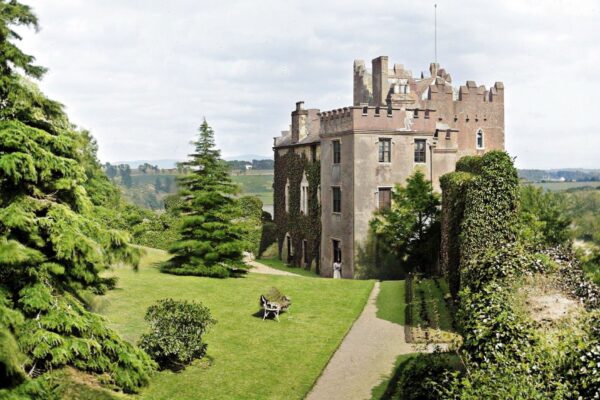
Clonbrick House, Clonbrick, Co. Tipperary South
Co. Tipperary |
Masonry Castles
In the rolling pastures of County Tipperary South, about 50 metres from the Dead River, stands a nineteenth-century farmhouse with a rather intriguing past.
This modest two-storey dwelling sits on the site of what was once Clonbrick Castle, a structure that had already fallen into ruin by the mid-seventeenth century. The Civil Survey of 1654-6 records that by 1640 the castle was already 'demolished', with its last known proprietor listed as one Cromuck Ryan of Bonnovoy; a name that hints at the Gaelic nobility who once controlled these lands.
What makes the current farmhouse particularly interesting is its construction materials. When it was built in the 1800s, the builders made practical use of the castle's remaining stonework, incorporating these medieval remnants into the new structure. Sharp-eyed visitors can spot punch-dressed jamb stones dating from the sixteenth or seventeenth century, now serving as the farmhouse doorway, whilst similar period stones have been repurposed as quoins, those distinctive corner stones that strengthen the building's edges.
The site offers excellent views across the surrounding countryside, a strategic advantage that no doubt influenced the original castle builders' choice of location. Today, this unremarkable farmhouse serves as a subtle reminder of Ireland's layered history, where practical Victorian farmers built their homes quite literally on the foundations of medieval power, recycling centuries-old stonework in a thoroughly unsentimental fashion that speaks volumes about the changing fortunes of Irish land ownership.
Visitor Notes
Added by