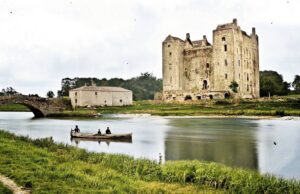
It has been identified, assigned a monument record, and mapped, yet the details that would explain what it actually is, who built it, and when, remain out of public reach. That gap is itself worth noting, because it reflects how much of Ireland's archaeological landscape is still being formally documented.
Enclosures are among the most common monument types in the Irish record. The term covers a broad range of features, from the circular earthen banks of a ringfort, which typically served as a farmstead enclosure during the early medieval period, to earlier prehistoric ditched enclosures used for ceremonial or funerary purposes. Without further detail, Cloghlea's enclosure could belong to almost any point across several millennia. The townland name itself, Cloghlea, derives from the Irish meaning something close to grey or flagstone rock, a common enough descriptor in a county whose limestone geology has shaped both the landscape and the way people settled and moved through it for thousands of years. Clare's Burren region in particular is dense with field systems, cairns, and enclosures that speak to long and layered occupation, and the broader county shares much of that character even beyond the Burren's boundary.