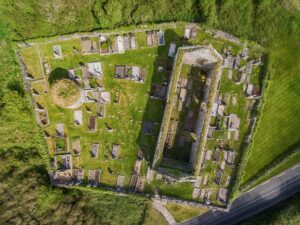
These features, found in their thousands across Ireland, are generally interpreted as Bronze Age cooking sites, though theories about their function have ranged from outdoor kitchens to dyeing troughs to early forms of sauna or sweat lodge. The typical arrangement involves a horseshoe-shaped mound of shattered stone surrounding a trough, often timber-lined, which would have been filled with water and brought to the boil by repeatedly dropping fire-heated stones into it. The stones fracture with the thermal shock, and over time accumulate into the distinctive burnt mounds that survive in the ground today, often identifiable by their dark, peaty soil and the telltale spread of heat-shattered rock.
The Clare landscape is particularly rich in prehistoric remains, and fulachtaí fia tend to cluster near water sources, in low-lying or marshy ground where a natural trough could be kept filled. The Commons site fits into this broader pattern, representing activity that would have taken place roughly between 1500 and 500 BC, during a period when this part of Ireland was farmed and settled in ways that left comparatively little above ground. The monument at Commons has been recorded as part of the national survey of archaeological sites, though the details of its precise condition, dimensions, and any associated finds remain in the archive rather than in the public record for now.