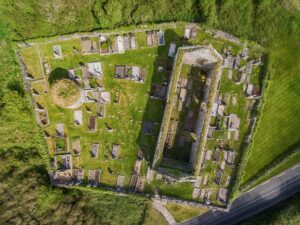
That a domestic structure from this period survives at all is worth pausing over. Bronze Age houses in Ireland were typically built from organic materials, timber and thatch chief among them, and so leave little for the ground to preserve. When traces do survive, they tend to appear as post-holes, hearth deposits, or low earthen platforms, easy to overlook and easily mistaken for natural features of the land.
Parknabinnia itself is well known to archaeologists as an area of exceptional prehistoric activity. The Burren's thin, free-draining soils and its long history of low-intensity land use have helped preserve field systems, tombs, and settlement remains that would long since have been ploughed out elsewhere. The wedge tomb at Parknabinnia is among the more discussed monuments in the area, and the presence of a Bronze Age house nearby suggests a pattern of occupation that extended well beyond the ceremonial. Bronze Age settlement in Ireland is generally dated to roughly 2500 to 500 BC, a period that saw communities farming, herding, and building across landscapes that would be recognisable in broad outline today, even if the detail has shifted considerably.