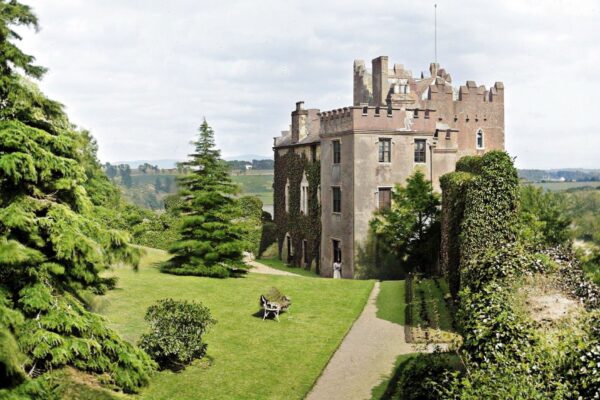
Set in a river valley with the Clodiagh River flowing about 100 metres to the west, the site consists of a dramatic motte topped with the ruins of a stone tower. Historical records from 1338 paint a rather bleak picture of the property when it was under the control of James le Botiller, Earl of Ormond; the manor was described as having 'no edifices except a stone tower covered with shingles' and was considered of 'no value because nobody wishes to hold it'. Despite this unflattering assessment, the burgesses of Moyaliff maintained a substantial holding, managing 220 acres of land for an annual rent of four pounds and sixteen pence.
The castle itself sits atop an impressive eight-metre-high motte with steep sides and a flat summit, though no bailey area is visible today. The limestone structure, measuring approximately 8.2 by 6.75 metres internally, shows varying degrees of preservation; whilst the base walls remain largely intact, the southeast wall stands highest at three metres. An interesting architectural quirk can be seen in this southeast wall, where the southern half projects beyond the northern portion, creating an irregular footprint. Inside the castle, collapsed masonry reveals the remnants of mural stairs, whilst a garderobe chute in the western wall speaks to the practical considerations of medieval castle living.
The site's proximity to a church 400 metres to the north suggests Moyaliff was once a more substantial settlement than its current ruins might indicate. The 14th-century description of the tower being 'roofed with shingles' provides a rare detail about medieval Irish castle construction, as most surviving examples have long since lost their original roofing materials. Today, these atmospheric ruins stand as a testament to the complex political and social landscape of medieval Tipperary, when even properties of the powerful Earl of Ormond could fall into such disrepair that no one wanted to occupy them.