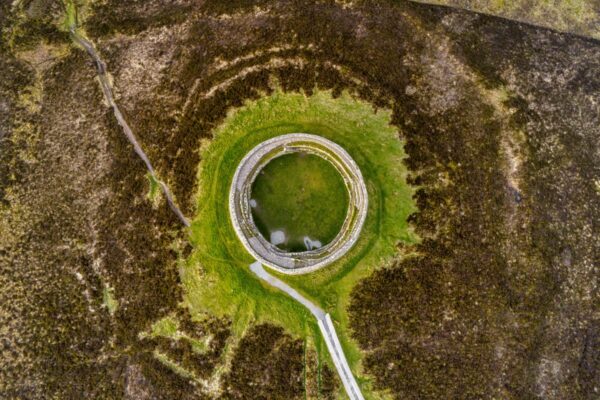
This fortification, built on a natural headland jutting into the Atlantic, represents the kind of strategic thinking that characterised Iron Age communities along Donegal's rugged coastline. Like many of Ireland's archaeological sites, the fort likely served multiple purposes: a defensive stronghold, a status symbol for local rulers, and a vantage point for monitoring both maritime traffic and potential threats approaching from the sea.
Promontory forts like the one at Cnoc Fola were particularly common along Ireland's western seaboard, where dramatic cliffs and rocky headlands provided natural defences on multiple sides. The builders would typically construct ramparts and ditches across the narrow neck of land connecting the promontory to the mainland, creating an easily defendable space. While the exact dating and occupation history of Cnoc Fola's fort awaits further research, these sites generally date from the Bronze Age through to the early medieval period, representing centuries of coastal occupation and adaptation to Ireland's Atlantic frontier.