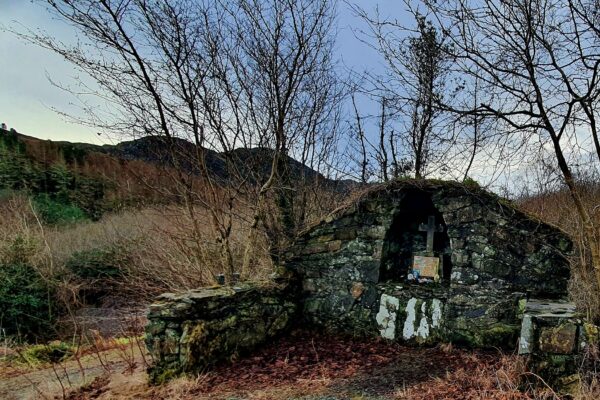
Ritual site - holy well, Loughros Glebe, Co. Donegal
Co. Donegal |
Holy Sites & Wells
Near the summit of Holywell Hill in Loughros Glebe, County Donegal, a modest opening in the ground marks what locals have long considered a holy well.
Situated in rough pasture beside the ruins of an old cashel, this unassuming spot has been recognised as a sacred site since at least the late 19th century, when antiquarian George Henry Kinahan documented it in his surveys of the area. The well sits adjacent to the ruined cashel known by the archaeological designation DG036-021, creating a small but significant ritual landscape on this Donegal hilltop.
Holy wells like this one are scattered throughout Ireland, often found near ancient ecclesiastical sites or prehistoric monuments. They represent a fascinating continuity of spiritual practice, where natural springs and water sources became focal points for religious devotion, healing rituals, and community gatherings. The association with the neighbouring cashel; a type of stone fort typically dating from the early medieval period; suggests this location may have been considered sacred for well over a thousand years.
Today, the well appears as little more than a simple gap in the earth, easily overlooked by casual walkers crossing the rough grazing land. Yet its inclusion in the Archaeological Survey of County Donegal confirms its cultural importance to the region's heritage. The survey, compiled by Brian Lacey and his team in 1983, meticulously catalogued field antiquities across the county from the Mesolithic period through to the 17th century, ensuring that even modest sites like this holy well remain part of Donegal's documented archaeological record.
Visitor Notes
Added by