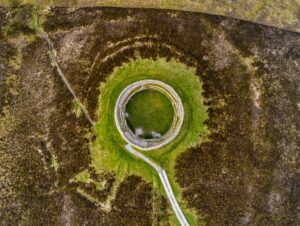
This ancient monument, whilst marked on modern surveys, curiously doesn't appear on the first edition of the Ordnance Survey 6-inch map, suggesting either its later discovery or perhaps an oversight by early cartographers. The stone stands as a silent sentinel in this remote corner of Ireland, its weathered surface bearing witness to countless centuries of Donegal's changing landscape.
Standing stones like the one at Speenoge are amongst Ireland's most enigmatic prehistoric monuments, typically dating from the Bronze Age period between 2500 and 500 BCE. These solitary pillars served various purposes for ancient communities; some marked burial sites, others delineated territorial boundaries, whilst many are believed to have held astronomical or ritual significance. The Speenoge stone's position on sloping ground overlooking the surrounding countryside would have made it a prominent landmark for prehistoric peoples navigating this part of Donegal.
The site was formally documented as part of the comprehensive Archaeological Survey of County Donegal, conducted by Brian Lacey and his team in 1983. This ambitious project catalogued field antiquities spanning from the Mesolithic period through to the 17th century, ensuring that monuments like the Speenoge standing stone are preserved in the historical record for future generations. Today, visitors willing to traverse the marshy terrain can still encounter this ancient marker, standing much as it has for millennia in the quiet Donegal countryside.