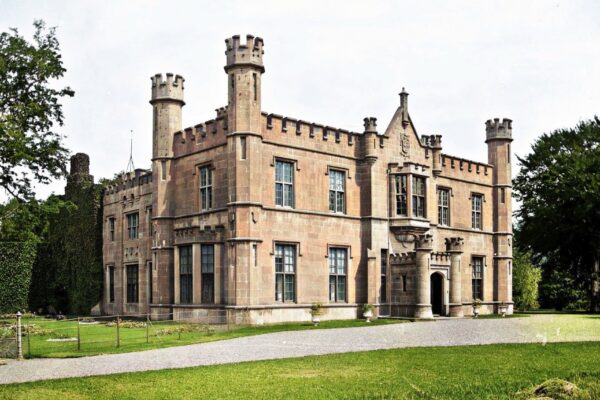
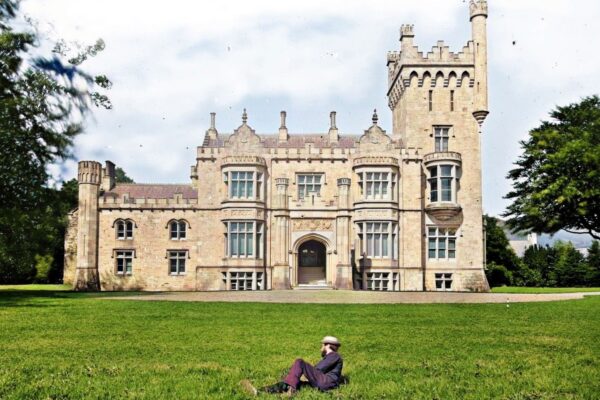
Stonewold Castle, Ballyshannon, Co. Donegal
Co. Donegal |
Masonry Castles
On the southern bank of the River Erne in County Donegal once stood Stonewold Castle, a modest tower-house that guarded a strategic ford where the river ran shallow enough to cross on foot when water levels permitted.
By the time of Griffith's Valuation, the property at Ballyhanna was being leased by Edward Allingham from the Conolly estate for £20 annually, and it appeared on both the 1st and 25-inch edition Ordnance Survey maps as Stone Wold. The property would later become associated with the Crawford family.
The rectangular structure measured roughly 36½ feet by 28½ feet, with impressively thick walls of 6½ feet that now stand at an average height of just 6 feet. Built atop a small mound, the castle's design was rather ingenious; its interior floor sat 5 feet below the top of the earthwork, essentially embedding the structure into the landscape for added defence.
The castle's defensive features extended beyond its thick walls. A fosse, partly artificial and partly natural, encircled the landward approaches to the mound, creating an additional barrier for any would-be attackers. Archaeological evidence suggests the main entrance was located on the eastern wall, where a gap in the masonry likely marks the position of the original doorway. This defensive arrangement was typical of smaller Irish tower-houses, which needed to balance practical fortification with the limited resources available to their builders.
Today, visitors won't find Stonewold Castle standing sentinel over the river crossing; the entire site now lies beneath the waters of the Erne, submerged during the construction of the river's hydroelectric scheme. This fate befell numerous archaeological sites along the river valley when the landscape was transformed for modern power generation, leaving only archaeological records and surveys to tell the story of this once-important defensive position at Ballyhanna.
Tags
- Ballyshannon
Visitor Notes
Added by