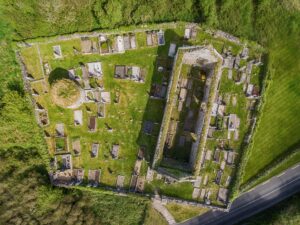
Wedge tombs are the most numerous of Ireland's megalithic monument types, built during the late Neolithic and into the early Bronze Age, roughly between 2500 and 2000 BC. They take their name from their shape: a roofed stone gallery that narrows and lowers from front to back, typically oriented towards the west or south-west, possibly in alignment with the setting sun. Clare has an unusually high concentration of them, the rocky terrain of the Burren in particular being scattered with examples that have endured four millennia of Atlantic weather with remarkable composure.
Beyond its classification and its county, the specific details of this particular monument remain sparse in the published record. What can be said is that wedge tombs served as communal burial places, and excavations at other sites across Ireland have produced cremated and unburned human remains, alongside pottery, flint tools, and occasionally copper or bronze objects from the later phases of use. They were not single-event constructions but places returned to, added to, and remembered across generations. The communities who built them are gone without names, but the labour involved in moving and raising these stones implies both organisation and intent that is hard to dismiss as incidental.