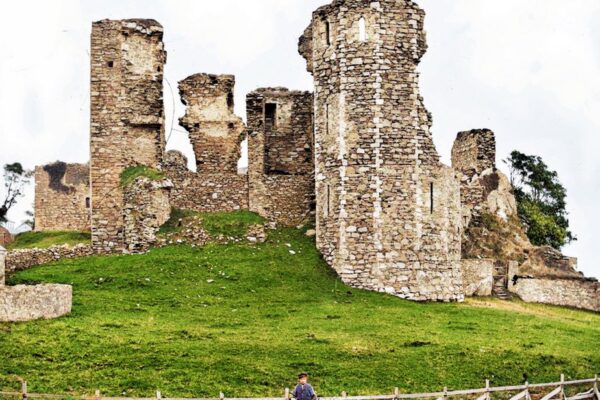
Castle, Ramelton, Co. Donegal
Co. Donegal |
Masonry Castles
At the head of an inlet where the River Leannan meets Lough Swilly, the town of Ramelton holds within its modern streets the ghostly footprint of a once formidable castle.
Built by Sir William Stewart before 1619, this substantial fortification served as both a defensive stronghold and a symbol of English plantation power in Ulster. The castle stood three and a half storeys tall, crowned with three round flankers and a striking circular staircase turret that reached 42 feet into the Donegal sky, complete with battlements and a defensive platform. Its military importance was underscored by the adjoining structures; a slate roofed house of one and a half storeys, a guard house for soldiers, and an impressive limestone bawn measuring 80 feet square with three square flankers providing additional defensive positions.
The 1622 description paints a picture of a thriving plantation settlement, with Stewart having established not just the castle but also a village and church at Ramelton. This carefully planned community represented the ambitions of the Ulster Plantation, bringing English and Scottish settlers to lands previously held by Gaelic lords. However, the castle's strategic importance made it a target during the tumultuous period following the 1641 rebellion, when it was burned and largely destroyed in the conflicts that engulfed Ireland.
By the early 19th century, only two walls of Stewart's castle remained standing, sketched by Ordnance Survey teams who documented these remnants along with a plan of the original site. Today, even these ruins have vanished from obvious view, though local tradition holds that parts of the castle structure were incorporated into later buildings, hidden beneath modern plaster. While the physical castle has largely disappeared, its location at the heart of present day Ramelton serves as a reminder of the town's plantation origins and the dramatic changes that swept through Donegal during the 17th century.
Tags
- Ramelton
Visitor Notes
Added by