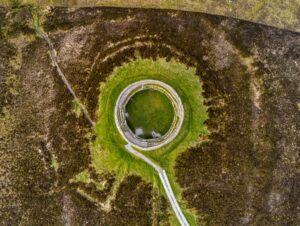
The burial site consists of a stone cist; a rectangular pit measuring 22 inches deep, carefully lined with small stones at the bottom and sealed with a substantial stone slab measuring 20 by 13 inches. This type of burial structure was common throughout Ireland during the Bronze Age, serving as a final resting place for cremated remains.
Within this modest stone chamber sat a cordoned urn, a distinctive type of Bronze Age pottery characterised by horizontal ridges or 'cordons' around its body. The urn contained something remarkable: the cremated remains of three individuals; two adults and a child, interred together in death. This practice of multiple burials in a single urn suggests these people likely shared close familial bonds, perhaps parents and their child, though we can only speculate about their exact relationship.
The cist's location near the top of cultivated land on Bogay Hill is significant, as Bronze Age communities often chose elevated positions for their burial sites, possibly to maintain a connection between the deceased and the living community below. The excavation, documented by Seán P. Ó Ríordáin in 1935, forms part of the Archaeological Survey of County Donegal, which catalogues the county's rich archaeological heritage from the Mesolithic period through to the 17th century. Such discoveries help piece together the story of Ireland's ancient inhabitants, their beliefs about death and the afterlife, and the importance they placed on keeping families together even in their final journey.